

How Microsoft could improve Windows by being more like Apple - harrisagover
Now that Microsoft has complete support for Windows 7, it has an opportunity to rethink how it manages its operating system of rules. It would beryllium a good time to train several lessons from its old opposition, Apple: Stop doing or s things that get Windows upgrades onerous, and start doing close to things that will keep Windows users faithful and joyful. Some particularly important things to stopover and start come to mind, corresponding:
Occlusion: Charging for upgrades
Microsoft fell far short of its widely publicized goal to get a billion citizenry to upgrade to Windows 10 inside three years. It's not hard to get a line why. Spell Microsoft offered a long grace period to upgrade to Windows 10 gratis, those WHO missed the deadline have to pay up (unless certain unofficial loopholes to upgrade to Windows 10 for resign still work). Windows 10 Home costs $139, while Windows 10 Pro, which brings "enterprise-grade security, brawny direction tools alike single sign-on, and enhanced productivity with Remote Background and Cortana," will set you back $200.
I stupefy wherefore Microsoft still charges OEMs for Windows 10 licenses—IT makes very much of money. Even though CEO Satya Nadella admitted, "the operating system is no longer the most important stratum for us," Windows is still the biggest cog in the trillion-dollar Microsoft machine. On that point are much a billion devices, upright as many active users, and piles of third-party licenses. Merely the end exploiter shouldn't ever pay.
Apple hasn't charged a penny for an upgrade since Mavericks landed in 2013. The simple fact that Microsoft still charges for upgrades—sometimes even on new Windows 10 devices—is just plain nonfunctional.
Pop out: Sticking with the same UI
Some other big reason why so many masses refused to upgrade from Windows 7 to Windows 8 OR Windows 10 wasn't budget constraints, sloth, or even hardware compatibility. IT was the Astronomic Change. Windows 8 represented a solid exit from the old way of Windows in just all but all way, with a new start menu, a tablet-oriented roofing tile interface, and an app structure. Windows 10 fixed most of Windows 8's biggest problems, but the scars stay to this day.
If you look backward at the archetype Macintosh OS X release from 2000, it's in truth not all that different than it is in real time. IT's the same with Android or iOS: Users expect period upgrades, just the wheel doesn't need to be reinvented to keep things fresh.
Microsoft has changed the feeling of its Bone numerous times over the long time. Forthwith that Windows 7 is dead, Windows 10 needs to be the way forward. So please dungeon IT the agency IT is (for the most part) for the foreseeable future.
Break: Having thus many versions of Windows
Along the Macintosh, in that respect's just macOS Catalina, whether you're running a $799 Mack mini operating theater a $50,000 Mac Pro. And the next edition, and the version after that, and the one after that leave be the same. When a new version of macOS arrives, no one needs to solve which version they're getting. We click Update, it installs, and life goes on.
Meanwhile, on the Microsoft face, IT's hard to maintain with all the other versions of Windows 10. There's Windows 10 S, Windows 10 Home, Windows 10 In favor, Windows 10 Education and Pro Education, Windows 10 Enterprise, and the dual-test-friendly Windows 10X. Who can forget when Windows 10 Mobile was a matter?
This is the most confounding thing about Windows from the linear perspective of Mac users. I can understand why you might postulate an Enterprise version, but that's it. Wherefore should Windows 10 Home people be underprivileged of the better security in Windows 10 Pro? Wherefore sell a stripped-down, "streamlined" Windows 10 S translation tied to the Windows Computer storage, but also offer to switch users to the fuller-featured Windows 10 In favou? It's all very confusing.
Because most Windows users will stick with the OS that comes with their PC, Microsoft should simply pass a single consumer adaptation of Windows: Windows 10. Break information technology all of the "pro" features, give birth daily updates, and make everyone happy.
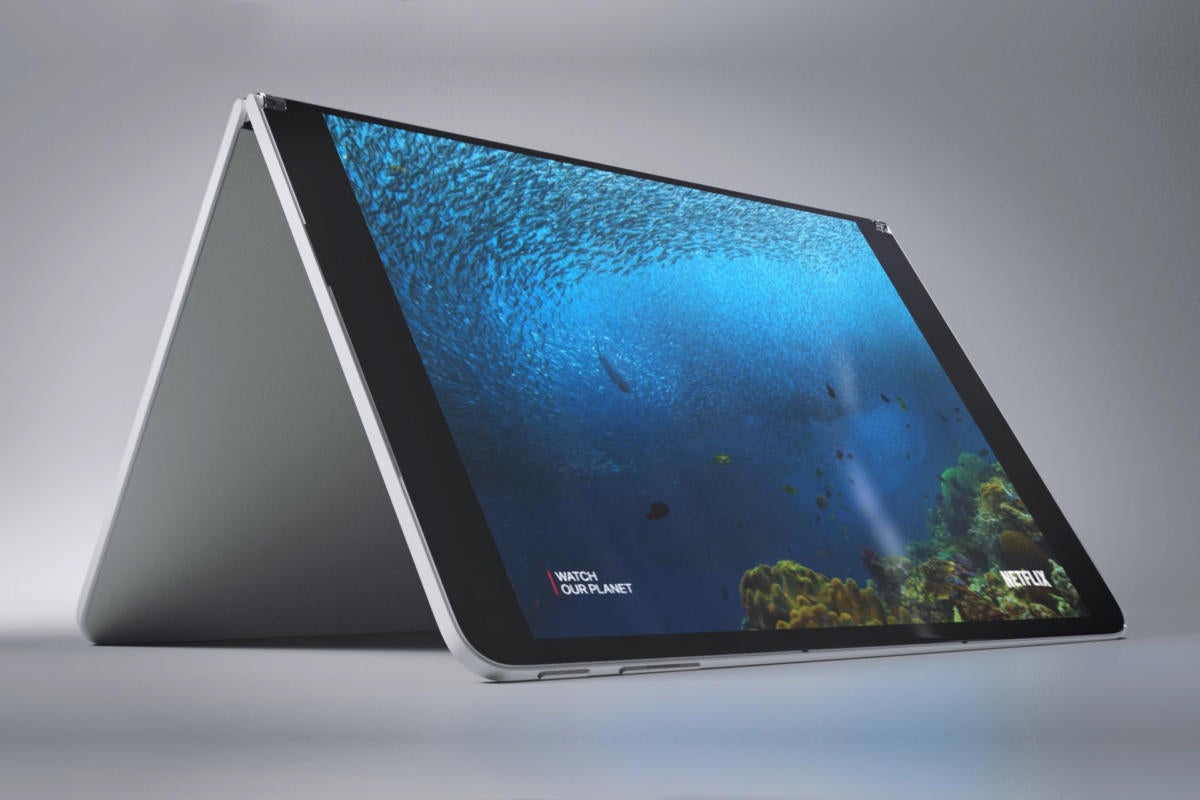
Start: Embracing the Surface Neo
 Microsoft
 The Surface Neo is Microsoft's nigh exciting product in years, because it wasn't built around Windows.
The biggest lesson Windows can take into the future doesn't come from Orchard apple tree, but from Microsoft itself: the dual-display, 360-degree-convertible security Surface Modern. It's unrivaled of the most tingling products of 2020, and even though it won't come until the end of the year, IT's already having an impact on the side by side generation of Windows.
When Apple designs a product, it doesn't try to cram it into the alive version of iOS operating theater macOS—IT designs both to work tandem. The hardware dictates the software system features and plots the means impudent.
That's how information technology is with the Come on Modern. Microsoft didn't hear to grind away the existing Windows 10 computer architecture into a new device. Information technology crafted both together into a New platform, Windows 10X.
Granted, I asked for few versions of Windows 10 originally in this story, but Windows 10X has a distinct intention. When you purchase a Windows 10X twist, you'll know that you're getting an experience built for the hardware that runs it, not the other way around. It's comparable Apple with iOS and iPadOS: The ii operating systems are largely the same, simply the interval actually eliminates confusion. The Surface Neo is easily the nearly exciting Microsoft device since the Come on, not because of its gorgeous hardware, only because of how beautiful the hardware and software mix.
 Microsoft
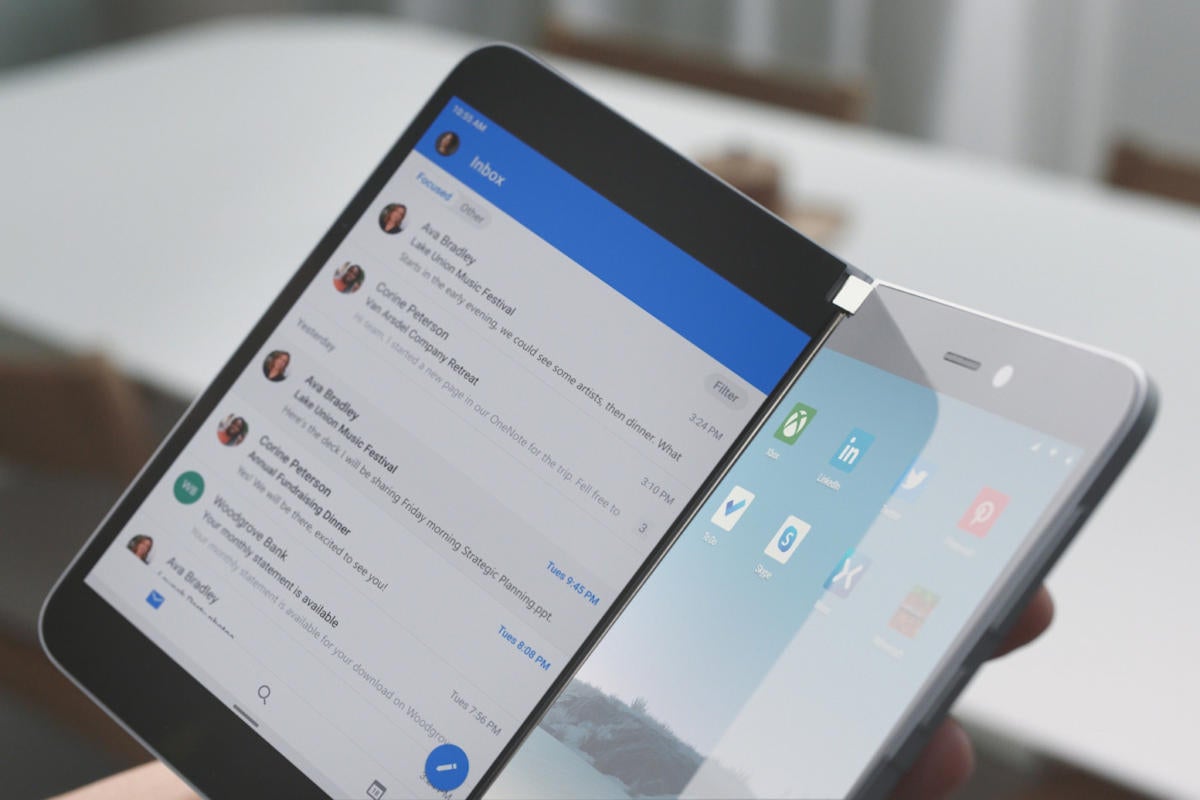
 The Surface Duo doesn't run Windows, but it's unmistakably a Microsoft twist.
Stop: Looking backward
The Surface Neo also reflects Nadella's vision that Windows isn't the future of Microsoft—in fact, OSes aren't wholly that important the least bit. Apps, services, and hardware are the way forward. Precedent: Side by side year's Surface Couple smartphone runs Android instead of Windows—but it bequeath still be a Microsoft device.
Sometime between the launch of Windows 10 and the death of Windows 7, Microsoft finally realized that a political platform and an OS needn't be one and the assonant. A Microsoft device running Microsoft apps using the Microsoft catapult on a forked version of Android ISN't any inferior on-brand than a Surface running play Windows 10.
Microsoft is leading the conversation with the Come up Neo in a sense the other Surface devices never did. If it's truly expiration to move on the far side the time-honored Windows model, IT needs to do more of this.
You know, ilk Malus pumila.

Source: https://www.pcworld.com/article/398650/how-microsoft-could-improve-windows-by-being-more-like-apple.html
Posted by: harrisagover.blogspot.com
0 Response to "How Microsoft could improve Windows by being more like Apple - harrisagover"
Post a Comment